
How to Stop Procrastinating: 5 Science-Backed Tricks That Actually Work

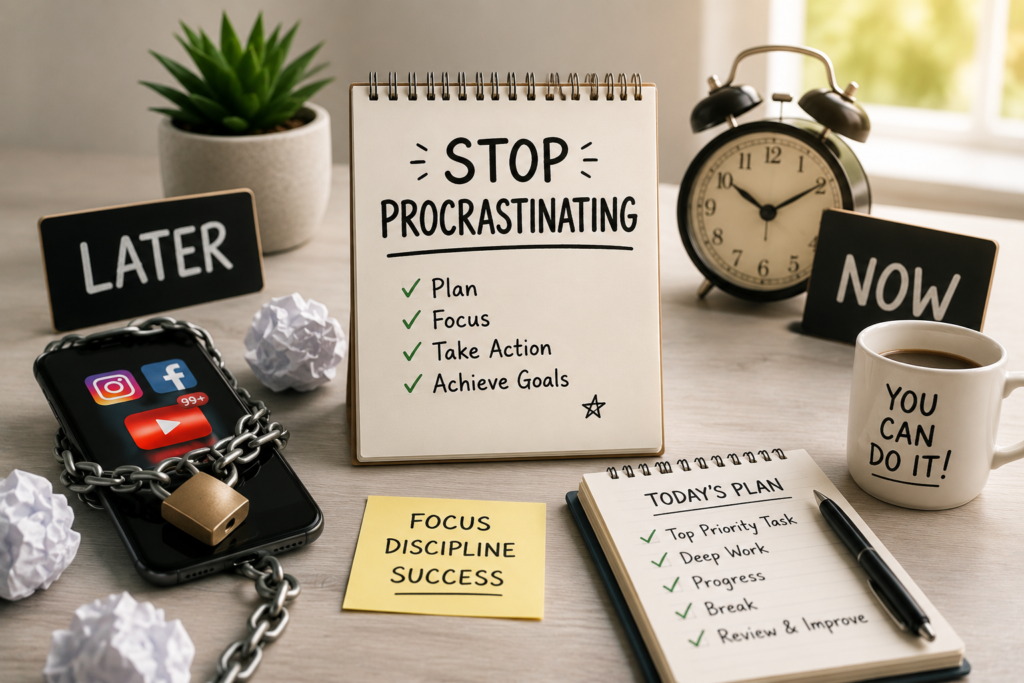
Have you ever found yourself scrolling through social media, cleaning your desk, or watching “just one more” video instead of tackling an important task?
You’re not lazy—and you’re certainly not alone.
Procrastination affects students, professionals, entrepreneurs, and even highly successful people. Research suggests that around 20% of adults are chronic procrastinators, often delaying important work despite knowing it may lead to stress, missed opportunities, or poor performance.
The good news? Procrastination isn’t a personality trait—it’s a habit. And like any habit, it can be changed.
In this article, you’ll discover five science-backed strategies that can help you stop procrastinating, increase productivity, and make progress toward your goals without relying on willpower alone.
Why Do We Procrastinate?
Many people think procrastination happens because of poor time management.
In reality, psychology tells us it’s often an emotion management problem.
We delay tasks because they make us feel:
- Overwhelmed
- Anxious
- Bored
- Insecure
- Afraid of failure
- Afraid of success
- Mentally exhausted
Your brain naturally seeks immediate comfort rather than long-term rewards.
That’s why checking your phone feels easier than starting a difficult project.
Understanding this is the first step toward overcoming procrastination.
The Hidden Cost of Procrastination
Putting tasks off doesn’t eliminate stress—it usually increases it.
Chronic procrastination can lead to:
- Missed deadlines
- Increased anxiety
- Lower productivity
- Poor work performance
- Reduced confidence
- Sleep problems
- Constant guilt
Breaking the cycle doesn’t just improve your productivity—it also improves your mental well-being.
Trick #1: Use the 5-Minute Rule
One of the biggest reasons we procrastinate is because the task feels too big.
Instead of telling yourself:
“I have to finish this entire project.”
Tell yourself:
“I’ll work on it for just five minutes.”
Why It Works
This technique reduces psychological resistance.
Once you begin, your brain often enters a state of momentum. Psychologists call this the Zeigarnik Effect, where unfinished tasks stay active in your mind, making you more likely to continue once you’ve started.
Most people keep working long after the initial five minutes.
How to Apply It
Instead of saying:
- Write a report
Say:
- Open the document.
- Write one paragraph.
- Spend only five minutes.
Getting started is often the hardest part.
Trick #2: Break Big Tasks into Tiny Steps
Large goals can feel intimidating.
Your brain perceives uncertainty as a threat, making avoidance more likely.
Instead of:
“Prepare presentation.”
Break it into:
- Create title slide
- Write outline
- Find images
- Design slide one
- Practice for five minutes
Each small task provides a sense of accomplishment, releasing dopamine—the brain’s motivation chemical.
Why This Works
Completing small steps creates momentum and builds confidence, making larger projects feel manageable.
Trick #3: Remove Temptations Before You Start
Willpower is limited.
Your environment often determines whether you’ll stay focused.
Research shows people are far more productive when distractions are removed before they begin working.
Common Distractions
- Phone notifications
- Social media
- Television
- Cluttered workspace
Create a Focus-Friendly Environment
Try these simple changes:
- Put your phone in another room.
- Turn off notifications.
- Close unnecessary browser tabs.
- Keep only work-related materials on your desk.
- Use website blockers if needed.
Reducing distractions lowers the mental effort required to stay on task.
Trick #4: Reward Progress, Not Just Completion
Many people wait until they’ve finished an entire project before celebrating.
Unfortunately, the brain responds better to frequent rewards.
Reward Ideas
After completing a focused work session, treat yourself to:
- A short walk
- Your favourite coffee
- Five minutes of stretching
- Listening to music
- Reading a few pages of a book
Why It Works
Positive reinforcement strengthens productive habits.
Over time, your brain begins associating focused work with enjoyable outcomes.
This makes starting future tasks easier.
Trick #5: Practice Self-Compassion Instead of Self-Criticism
Ironically, beating yourself up for procrastinating often makes procrastination worse.
Negative self-talk increases stress, which encourages further avoidance.
Instead of saying:
“I’m so lazy.”
Try saying:
“I’m struggling today, but I can still make progress.”
Research Shows
People who practise self-compassion are more likely to recover quickly after setbacks and less likely to procrastinate in the future.
Being kind to yourself isn’t an excuse—it creates the emotional resilience needed to take action.
Bonus Tips to Beat Procrastination
Set Clear Deadlines
Vague goals lead to vague action.
Instead of:
“I’ll do it later.”
Say:
“I’ll work on this from 10:00–10:30 AM.”
Specific plans increase follow-through.
Try the Pomodoro Technique
Work for:
- 25 minutes
- Take a 5-minute break
Repeat four times.
This keeps your brain fresh while reducing mental fatigue.
Focus on Progress, Not Perfection
Perfectionism is a hidden form of procrastination.
Many people delay starting because they fear producing imperfect work.
Remember:
Done is often better than perfect.
You can always improve your work later.
Sleep and Exercise Matter
A tired brain finds it harder to focus.
Regular exercise and quality sleep improve:
- Attention
- Memory
- Decision-making
- Motivation
Even a 20-minute walk can improve mental clarity.
Identify Your Peak Productivity Hours
Some people focus best in the morning.
Others perform better in the afternoon or evening.
Schedule your most important tasks during your highest-energy hours whenever possible.
Common Procrastination Myths
Myth 1: I Work Better Under Pressure
While deadlines may increase urgency, last-minute work often produces more stress and lower-quality results.
Myth 2: I Need More Motivation
Action often comes before motivation—not the other way around.
Starting creates momentum.
Myth 3: Successful People Never Procrastinate
Even highly successful people procrastinate occasionally.
The difference is that they have systems to help them get started again quickly.
Signs You’re Stuck in a Procrastination Cycle
You may be caught in the cycle if you:
- Constantly delay important tasks
- Spend hours on low-priority activities
- Feel guilty without taking action
- Wait for the “perfect” time
- Frequently miss deadlines
- Feel overwhelmed before starting
Recognizing the pattern is the first step toward breaking it.
How to Build Long-Term Productive Habits
Beating procrastination isn’t about working harder—it’s about creating habits that make action easier.
Start by:
- Planning tomorrow’s priorities the night before.
- Keeping your workspace organised.
- Starting with your most important task.
- Celebrating small wins.
- Reviewing your progress weekly.
Consistency beats intensity.
Small daily improvements compound into remarkable results over time.
Learning how to stop procrastinating isn’t about becoming perfectly disciplined—it’s about understanding how your brain works and using strategies that make taking action easier. Procrastination is often driven by fear, overwhelm, or discomfort rather than laziness, which means you can overcome it with the right mindset and practical habits.
Start small. Commit to just five minutes, break overwhelming tasks into manageable steps, remove distractions, reward your progress, and treat yourself with compassion when things don’t go as planned. These science-backed techniques may seem simple, but practised consistently, they can transform the way you work, helping you achieve more with less stress and greater confidence.
Remember, you don’t have to feel motivated to begin—you simply have to begin.