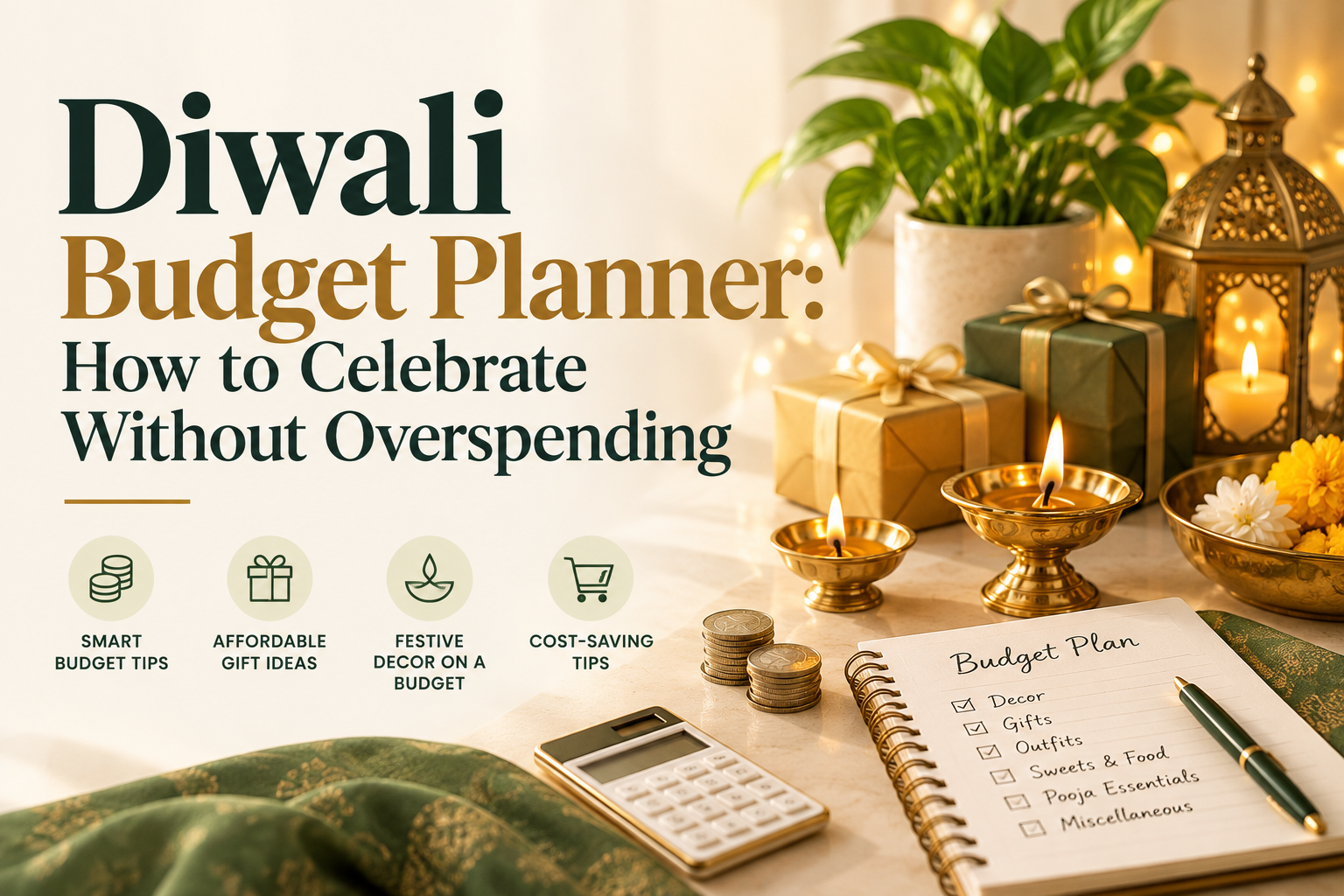
The easiest way to enjoy Diwali without overspending is to decide your total budget before you shop, split it across categories, and track every rupee against that plan. That’s it. The rest of this guide shows you exactly how, with a sample budget you can copy.
Diwali 2026 is on Sunday, 8 November, with Dhanteras on Friday, 6 November. That leaves just enough time to plan before the shopping rush peaks.
Why Diwali spending gets out of hand
It’s rarely one big purchase. It’s dozens of small ones: an extra box of sweets, a last-minute gift, a “70% off” deal you didn’t plan for. Then the credit card bill arrives in November.
You’re not alone if this sounds familiar. In a Paisabazaar survey of Diwali 2025 shoppers, over 42% of credit card users spent more than ₹50,000 on festive purchases. One chartered accountant who tracked her own family’s Diwali spending for five years found it came in about 30% higher than planned every single time, because costs were underestimated from the start.
A simple planner fixes both problems.
How to Plan Your Diwali Budget in 7 Steps
Step 1: Decide your total Diwali budget
Start with one number, not a shopping list. Financial planners often suggest keeping festive spending to about 10–15% of your monthly income. On a ₹50,000 monthly income, that’s ₹5,000 to ₹7,500.
If you’ve been setting money aside for Diwali, use that amount instead. The key rule: your budget should come from cash you already have, not from next month’s salary.
Step 2: List every expense
Write down everything Diwali will cost you, including the easily forgotten items:
- Gifts for family, friends, domestic help and colleagues
- Sweets, dry fruits and festive meals
- New clothes
- Diyas, lights, rangoli colours and decorations
- Puja items (idol, flowers, puja samagri)
- Home cleaning, painting or small repairs
- Travel to family, and guests at home
Step 3: Split your budget by category
Here’s a sample split for a ₹7,500 Diwali budget. Adjust the percentages to match what matters most to your family.
| Category | Share | Amount |
|---|---|---|
| Gifts | 30% | ₹2,250 |
| Sweets and food | 20% | ₹1,500 |
| Clothes | 20% | ₹1,500 |
| Decor and diyas | 10% | ₹750 |
| Puja items | 10% | ₹750 |
| Buffer for surprises | 10% | ₹750 |
| Total | 100% | ₹7,500 |
Step 4: Make a gift list with a limit per person
Gifts are where most budgets break. List every person you’ll buy for and set a limit next to each name, for example ₹300 for colleagues and ₹500 for close family. If the total is more than your gift budget, lower the limits or combine gifts for families.
Step 5: Keep a 10% buffer
Something unplanned always comes up: a guest you didn’t expect, a forgotten gift, a price that went up. A small buffer stops these surprises from breaking your whole budget.
Step 6: Track planned vs actual spending
Use a notebook, a free budgeting app or a simple sheet with three columns: category, planned amount and actual amount. Update it every time you spend. If one category goes over, cut back in another.
| Category | Planned | Actual | Difference |
|---|---|---|---|
| Gifts | ₹2,250 | ||
| Sweets and food | ₹1,500 | ||
| Clothes | ₹1,500 | ||
| Decor and diyas | ₹750 | ||
| Puja items | ₹750 | ||
| Buffer | ₹750 |
[Optional: link a printable Diwali Budget Planner PDF from your Gumroad store here.]
Step 7: Pay with money you have
Use cash, UPI or a debit card wherever possible. If you use a credit card for rewards, pay the full bill on time. Interest on an unpaid card balance can cost far more than any festive discount saves.
Smart Ways to Save Money This Diwali
On gifts
- Give homemade sweets. A box of homemade laddoos or chakli in a nice container feels more personal than a store-bought box, and costs less.
- Try a family Secret Santa. Instead of everyone buying for everyone, each person buys one good gift.
- Gift something useful. A brass diya, a small plant or a copper bottle is remembered long after the sweets are gone. See our list of Dhanteras buys under ₹2,000 for ideas.
On shopping and sales
- Check the original price. Many “big discounts” are on inflated prices. Compare on two or three sites before buying.
- Use the 24-hour rule. If it isn’t on your list, wait a day. Most impulse buys don’t survive the wait.
- Finish shopping a few days early. Prices and crowds both peak just before Diwali.
- Read the fine print on no-cost EMI and Buy Now Pay Later. Note when each payment starts. Several small EMIs landing in the same month can strain your budget well after the festival.
On decor
- Reuse and refresh. Polish last year’s brass diyas and lights instead of buying new ones.
- Make your own rangoli with flowers, rice or rangoli colours instead of ready-made stickers.
- Choose LED lights. They cost a little more upfront but use far less electricity.
On sweets and food
- Make one or two sweets at home and buy the rest from a trusted local shop.
- Buy dry fruits in bulk and pack them into small gift boxes yourself.
On your Diwali bonus
If you get a festive bonus, decide how to split it before it reaches your account. For example: one part for Diwali, one part for savings or your emergency fund, and one part to clear any debt. Spending the whole bonus is the most common festive money mistake.
Frequently Asked Questions
How much should I spend on Diwali?
A common guideline is 10–15% of your monthly income. The right number is whatever you can pay in full from money you already have, without touching your emergency fund or borrowing.
How do I make a Diwali budget?
Decide your total, list every expense, split the total by category, set a limit per gift, keep a 10% buffer, and track planned against actual spending as you go.
Is it okay to use a credit card for Diwali shopping?
Yes, if you pay the full bill by the due date. Cards can give useful cashback and rewards. The problem starts when you carry a balance, because card interest quickly wipes out any discount.
How can I celebrate Diwali on a small budget?
Focus on what matters most to your family. Make sweets at home, reuse decorations, give homemade or useful gifts, and spend time together rather than money.
What is the biggest money mistake during Diwali?
Shopping without a set budget. Without one, small unplanned purchases and sale deals add up fast, and the bill arrives in November.
A happy Diwali isn’t measured by how much you spend. It’s the lamps, the people and the peace of mind of starting the new year without a pile of bills. Set your number, split it, track it, and enjoy every moment of the festival.
Want to keep that momentum after Diwali? Try our 52-Week Money Saving Challenge for the new year.
Wishing you a joyful and prosperous Diwali.
Related Posts