
You don’t need a complete lifestyle overhaul to feel better.
Small, consistent habits often make the biggest difference.
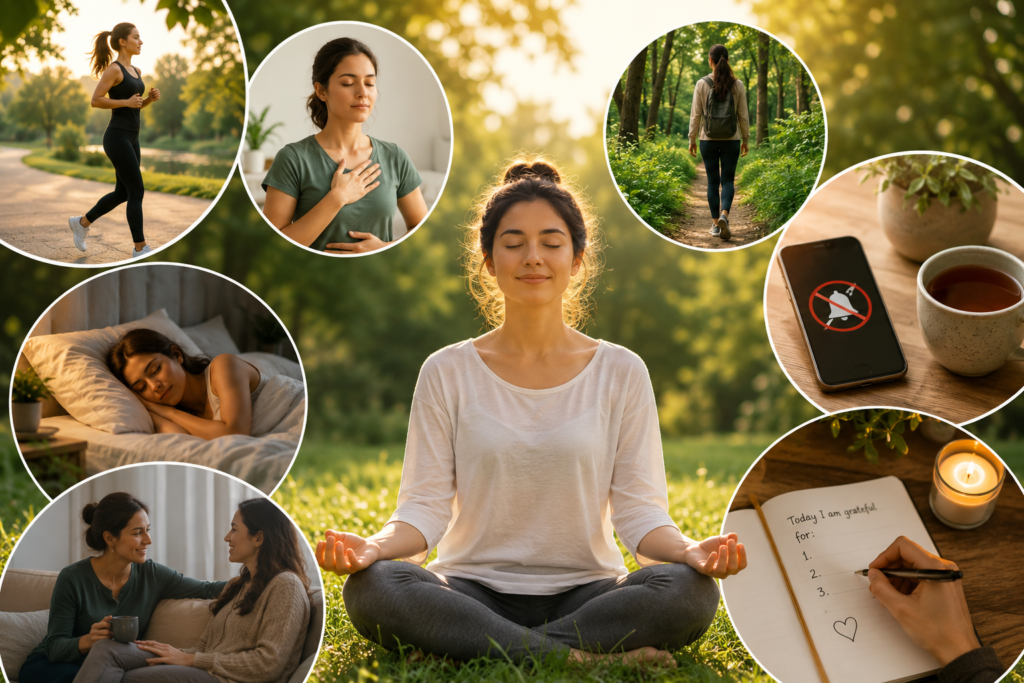
1. Move Your Body
Exercise lowers cortisol while increasing feel-good hormones called endorphins.
Aim for at least 30 minutes of walking, cycling, yoga, or dancing most days of the week.
2. Practice Deep Breathing
Try the 4-6 breathing technique:
- Inhale for 4 seconds.
- Exhale slowly for 6 seconds.
- Repeat for five minutes.
This activates your body’s relaxation response.
3. Spend Time Outdoors
Research suggests spending time in nature can reduce stress hormones, improve mood, and increase mental clarity.
Even a 20-minute walk in a park can help.
4. Limit Screen Time
Constant notifications keep your brain in a state of alertness.
Try:
- No phone during meals.
- Screen-free mornings.
- No social media before bedtime.
Your mind needs quiet moments to recover.
5. Prioritize Quality Sleep
Sleep is one of the most effective natural stress relievers.
Aim for:
- 7–9 hours nightly
- Cool, dark bedroom
- Consistent bedtime
- Minimal caffeine late in the day
6. Talk to Someone
Sharing your thoughts with a trusted friend, family member, or mental health professional can significantly reduce emotional burden.
You don’t have to carry stress alone.
7. Practice Gratitude
Taking two minutes daily to write down three things you’re grateful for can gradually shift your focus away from constant worry and improve emotional well-being.
When Should You Seek Professional Help?
While occasional stress is normal, it’s important to seek help if:
- Stress lasts for several weeks or months.
- It interferes with work or relationships.
- You experience panic attacks.
- You feel hopeless or emotionally numb.
- You’re using alcohol, food, or other unhealthy coping mechanisms to manage stress.
- You have thoughts of harming yourself.
A qualified healthcare professional or therapist can help identify the underlying causes and recommend effective treatments.
Final Thoughts
Stress doesn’t always announce itself with panic attacks or overwhelming anxiety. Often, it hides behind fatigue, forgetfulness, irritability, body aches, poor sleep, unhealthy cravings, and frequent illness. Learning to recognise these subtle warning signs gives you the opportunity to take action before stress develops into burnout or more serious health problems.
The good news is that small daily habits—such as moving your body, sleeping well, practising mindful breathing, spending time outdoors, and setting healthy boundaries—can make a meaningful difference. If your symptoms persist or begin affecting your quality of life, don’t hesitate to seek professional support. Prioritising your mental health is one of the most valuable investments you can make for your long-term well-being.
Frequently Asked Questions (FAQs)
1. What are the hidden signs of stress?
Hidden signs of stress include constant fatigue, irritability, forgetfulness, muscle tension, sugar cravings, poor sleep, difficulty relaxing, and frequent illness.
2. Can stress cause physical symptoms?
Yes. Chronic stress can contribute to headaches, neck pain, digestive issues, muscle aches, fatigue, chest tightness, and a weakened immune system.
3. How can I reduce stress naturally?
Regular exercise, quality sleep, deep breathing, mindfulness, spending time in nature, eating nutritious foods, and connecting with supportive people are effective ways to manage stress naturally.
4. How do I know if my stress is becoming serious?
If stress lasts for weeks, affects your work, relationships, or health, or causes persistent anxiety, depression, panic attacks, or thoughts of self-harm, seek help from a healthcare professional.