
Morning vs Night Skincare Routine: What Actually Matters (And What You Can Skip)

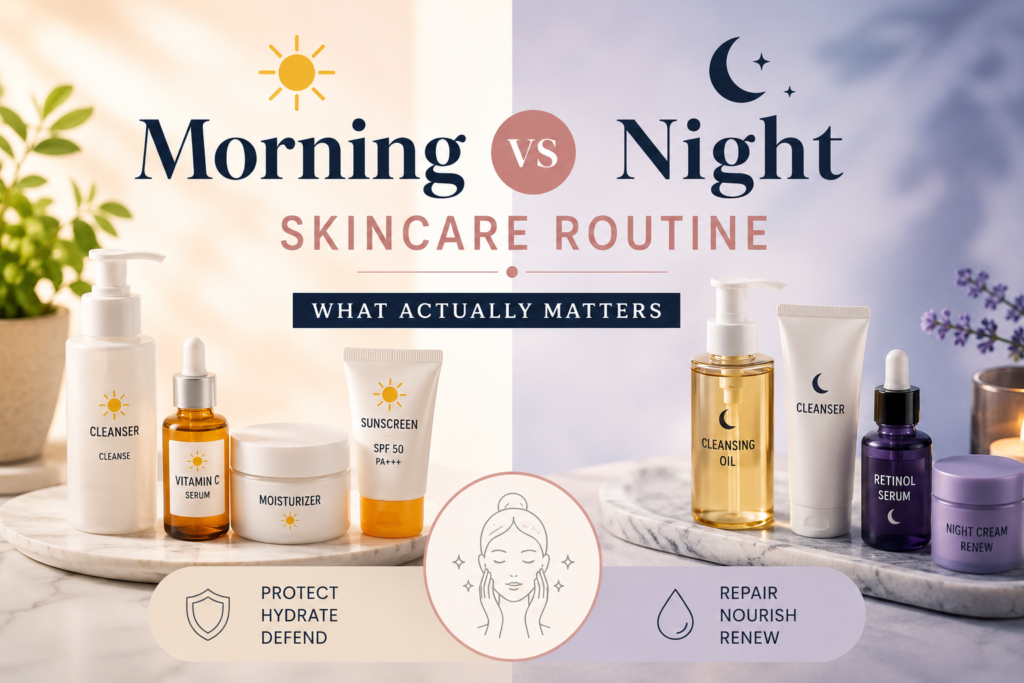
With endless skincare advice on social media, it’s easy to wonder whether you really need separate morning and night skincare routines. Some influencers swear by 10-step routines, while dermatologists often recommend keeping things simple.
So, what actually matters?
The truth is that your skin has different needs during the day and at night. A morning skincare routine focuses on protecting your skin from environmental damage, while a night skincare routine is designed to repair, nourish, and restore your skin while you sleep.
In this guide, we’ll explain the difference between morning and night skincare, the essential products you actually need, and common mistakes to avoid.
Why Your Skin Needs Different Care During the Day and Night
Your skin works around the clock.
During the day, it’s exposed to:
- UV rays
- Pollution
- Dirt
- Sweat
- Blue light from screens
- Makeup
At night, your skin switches into repair mode by:
- Producing new skin cells
- Repairing damaged tissues
- Rebuilding collagen
- Restoring hydration
That’s why using the same products morning and night isn’t always the best approach.
Morning Skincare Routine: Protect Your Skin
Think of your morning routine as your skin’s protective shield.
The goal is to defend against damage before it happens.
Step 1: Gentle Cleanser
Wash away overnight oil and sweat without stripping your skin.
Choose a cleanser based on your skin type:
- Gel cleanser for oily skin
- Cream cleanser for dry skin
- Hydrating cleanser for sensitive skin
Avoid harsh soaps that leave your skin feeling tight.
Step 2: Antioxidant Serum (Optional but Beneficial)
A Vitamin C serum is one of the best additions to a morning skincare routine.
Benefits include:
- Brightens dull skin
- Helps fade pigmentation
- Protects against free radical damage
- Supports collagen production
Apply it after cleansing and before moisturiser.
Step 3: Moisturiser
Even oily skin needs hydration.
A good moisturiser:
- Strengthens the skin barrier
- Locks in moisture
- Prevents excessive oil production
- Creates a smooth base for makeup
Look for ingredients like:
- Hyaluronic acid
- Ceramides
- Glycerin
- Squalane
Step 4: Sunscreen (The Most Important Step)
If you only follow one skincare rule, make it this one.
Daily sunscreen helps protect against:
- Premature ageing
- Dark spots
- Sunburn
- Fine lines
- Skin cancer
Use a broad-spectrum SPF 30 or higher every morning, even on cloudy days or when staying indoors near windows.
Reapply every two hours if you’re outdoors for extended periods.
Night Skincare Routine: Repair and Renew
While you sleep, your skin focuses on healing itself.
Your evening routine should support this natural process.
Step 1: Remove Makeup and Sunscreen
Never sleep with makeup or sunscreen on.
Use:
- Cleansing balm
- Micellar water
- Oil cleanser
If you wear heavy makeup or waterproof sunscreen, consider double cleansing.
Step 2: Cleanse Again
After removing makeup, wash your face with a gentle cleanser to remove any remaining dirt, oil, and impurities.
Clean skin allows your treatment products to work more effectively.
Step 3: Treatment Products
Night is the best time for active ingredients because your skin isn’t exposed to sunlight.
Popular nighttime treatments include:
Retinol
Helps reduce:
- Wrinkles
- Fine lines
- Acne
- Uneven skin tone
Start slowly—use it two to three nights a week to minimise irritation.
Niacinamide
A versatile ingredient that:
- Reduces redness
- Controls oil
- Minimises pores
- Improves skin texture
AHAs and BHAs
Chemical exfoliants help remove dead skin cells and encourage smoother, brighter skin.
Use them only one or two times per week unless advised otherwise by a skincare professional.
Step 4: Night Moisturiser
Night creams are often richer than daytime moisturisers.
They help:
- Restore hydration
- Strengthen the skin barrier
- Reduce overnight moisture loss
- Support skin repair
Ingredients like ceramides, peptides, and shea butter are especially nourishing for dry skin.
Morning vs Night Skincare Routine: Key Differences
| Morning Routine | Night Routine |
|---|---|
| Protects the skin | Repairs the skin |
| Focuses on prevention | Focuses on recovery |
| Includes sunscreen | No sunscreen needed |
| Vitamin C works well | Retinol and exfoliants work well |
| Lightweight moisturiser | Richer moisturiser |
Skincare Routine by Skin Type
Oily Skin
Morning:
- Gentle foaming cleanser
- Niacinamide serum
- Oil-free moisturiser
- SPF 50 sunscreen
Night:
- Cleanser
- Retinol (2–3 nights weekly)
- Lightweight gel moisturiser
Dry Skin
Morning:
- Hydrating cleanser
- Vitamin C serum
- Rich moisturiser
- SPF 30 or higher
Night:
- Cream cleanser
- Hydrating serum
- Thick moisturiser with ceramides
Combination Skin
Choose lightweight hydrating products that balance oil without drying out your skin.
Sensitive Skin
Stick to fragrance-free skincare products with soothing ingredients such as:
- Aloe vera
- Oat extract
- Centella asiatica
- Ceramides
Introduce new products gradually and patch-test before full use.
When it comes to morning vs night skincare routine, the biggest difference lies in your skin’s purpose at different times of the day. During the morning, your priority should be protecting your skin from UV rays, pollution, and environmental stress with a gentle cleanser, moisturiser, antioxidant serum, and sunscreen. At night, your skin naturally repairs itself, making it the ideal time to use targeted treatments like retinol or exfoliating acids followed by a nourishing moisturiser.
You don’t need a cupboard full of products to achieve healthy, glowing skin. The most effective daily skincare routine is one that you can follow consistently. By choosing products suited to your skin type and focusing on protection during the day and repair at night, you’ll build a routine that supports long-term skin health and a radiant complexion.